
Ecuador Population: 16,498,502
«  Previous Country | Next Country Previous Country | Next Country  » » | 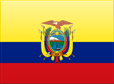 |
| History | |
| What is now Ecuador formed part of the northern Inca Empire until the Spanish conquest in 1533. Quito became a seat of Spanish colonial government in 1563 and part of the Viceroyalty of New Granada in 1717. The territories of the Viceroyalty - New Granada (Colombia), Venezuela, and Quito - gained their independence between 1819 and 1822 and formed a federation known as Gran Colombia. When Quito withdrew in 1830, the traditional name was changed in favor of the "Republic of the Equator." Between 1904 and 1942, Ecuador lost territories in a series of conflicts with its neighbors. A border war with Peru that flared in 1995 was resolved in 1999. Although Ecuador marked 30 years of civilian governance in 2004, the period was marred by political instability. Protests in Quito contributed to the mid-term ouster of three of Ecuador's last four democratically elected presidents. In late 2008, voters approved a new constitution, Ecuador's 20th since gaining independence. General elections were held in April 2017, and voters elected President Lenin MORENO. |

|  |
| |
| Geography | |
| |
| Location: | Western South America, bordering the Pacific Ocean at the Equator, between Colombia and Peru |
| Geographic coordinates: | 2 00 S, 77 30 W |
| Area: | total: 283,561 sq km land: 276,841 sq km water: 6,720 sq km note: includes Galapagos Islands Size comparison: slightly smaller than Nevada |
| Land Boundaries: | total: 2,237 km border countries (2): Colombia 708 km, Peru 1529 km |
| Coastline: | 2,237 km |
| Maritime claims: | territorial sea: 200 nm exclusive economic zone: 200 nm continental shelf: 200 nm note: Ecuador has declared its right to extend its continental shelf to 350nm measured from the baselines of the Galapagos Archipelago |
| Climate: | tropical along coast, becoming cooler inland at higher elevations; tropical in Amazonian jungle lowlands |
| Terrain: | coastal plain (costa), inter-Andean central highlands (sierra), and flat to rolling eastern jungle (oriente) |
| Natural resources: | petroleum, fish, timber, hydropower |
| Land use: | agricultural land: 29.7% (2011 est.) arable land: 4.7% (2011 est.) permanent crops: 5.6% (2011 est.) permanent pasture: 19.4% (2011 est.) forest: 38.9% (2011 est.) other: 31.4% (2011 est.) |
| Irrigated land: | 15,000 sq km (2012) |
| Natural hazards: | frequent earthquakes; landslides; volcanic activity; floods; periodic droughts volcanism: volcanic activity concentrated along the Andes Mountains; Sangay (5,230 m), which erupted in 2010, is mainland Ecuador's most active volcano; other historically active volcanoes in the Andes include Antisana, Cayambe, Chacana, Cotopaxi, Guagua Pichincha, Reventador, Sumaco, and Tungurahua; Fernandina (1,476 m), a shield volcano that last erupted in 2009, is the most active of the many Galapagos volcanoes; other historically active Galapagos volcanoes include Wolf, Sierra Negra, Cerro Azul, Pinta, Marchena, and Santiago |
| Current Environment Issues: | deforestation; soil erosion; desertification; water pollution; pollution from oil production wastes in ecologically sensitive areas of the Amazon Basin and Galapagos Islands |
| International Environment Agreements: | party to: Antarctic-Environmental Protocol, Antarctic Treaty, Biodiversity, Climate Change, Climate Change-Kyoto Protocol, Desertification, Endangered Species, Hazardous Wastes, Ozone Layer Protection, Ship Pollution, Tropical Timber 83, Tropical Timber 94, Wetlands signed, but not ratified: none of the selected agreements |
| ^Back to Top | |
| People | |
| |
| Nationality: | noun: Ecuadorian(s) adjective: Ecuadorian |
| Ethnic groups: | mestizo (mixed Amerindian and white) 71.9%, Montubio 7.4%, Amerindian 7%, white 6.1%, Afroecuadorian 4.3%, mulatto 1.9%, black 1%, other 0.4% (2010 est.) |
| Languages: | Spanish (Castilian) 93% (official), Quechua 4.1%, other indigenous 0.7%, foreign 2.2% (2010 est.) note: (Quechua and Shuar are official languages of intercultural relations; other indigenous languages are in official use by indigenous peoples in the areas they inhabit) |
| Religions: | Roman Catholic 74%, Evangelical 10.4%, Jehovah's Witness 1.2%, other 6.4% (includes Mormon, Buddhist, Jewish, Spiritualist, Muslim, Hindu, indigenous, African American, Pentecostal), atheist 7.9%, agnostic 0.1% (2012 est.) note: data represent persons at least 16 years of age from five Ecuadoran cities |
| Population: | 16,498,502 (July 2018 est.) |
| Age structure: | 0-14 years: 26.64% (male 2,242,148 /female 2,153,776) 15-24 years: 18.19% (male 1,526,300 /female 1,474,626) 25-54 years: 39.82% (male 3,207,692 /female 3,362,464) 55-64 years: 7.67% (male 615,769 /female 649,777) 65 years and over: 7.67% (male 599,221 /female 666,729) (2018 est.) |
| Dependency ratios: | total dependency ratio: 55.6 (2015 est.) youth dependency ratio: 45.1 (2015 est.) elderly dependency ratio: 10.4 (2015 est.) potential support ratio: 9.6 (2015 est.) |
| Median age: | total: 28.1 years male: 27.3 years female: 28.8 years (2018 est.) |
| Population growth rate: | 1.25% (2018 est.) |
| Birth rate: | 17.6 births/1,000 population (2018 est.) |
| Death rate: | 5.1 deaths/1,000 population (2018 est.) |
| Net migration rate: | 0 migrant(s)/1,000 population (2018 est.) |
| Urbanization: | urban population: 63.8% of total population (2018) rate of urbanization: 1.66% annual rate of change (2015-20 est.) |
| Major urban areas - population: | 2.899 million Guayaquil 1.822 million QUITO (capital) (2018) |
| Sex ratio: | at birth: 1.05 male(s)/female 0-14 years: 1.04 male(s)/female 15-24 years: 1.04 male(s)/female 25-54 years: 0.95 male(s)/female 55-64 years: 0.95 male(s)/female 65 years and over: 0.9 male(s)/female total population: 0.99 male(s)/female (2018 est.) |
| Maternal mortality rate: | 64 deaths/100,000 live births (2015 est.) |
| Infant mortality rate: | total: 15.9 deaths/1,000 live births male: 18.8 deaths/1,000 live births female: 12.8 deaths/1,000 live births (2018 est.) |
| Life expectancy at birth: | total population: 77.1 years male: 74.2 years female: 80.3 years (2018 est.) |
| Total fertility rate: | 2.15 children born/woman (2018 est.) |
| Contraceptive prevalence rate: | 80.1% (2007/12) |
| Physicians density: | 2.05 physicians/1,000 population (2016) |
| Hospital bed density: | 1.5 beds/1,000 population (2013) |
| Drinking water source: | improved: urban: 93.4% of population rural: 75.5% of population total: 86.9% of population unimproved: urban: 6.6% of population rural: 24.5% of population total: 13.1% of population (2015 est.) |
| Sanitation facility access: | improved: urban: 87% of population (2015 est.) rural: 80.7% of population (2015 est.) total: 84.7% of population (2015 est.) unimproved: urban: 13% of population (2015 est.) rural: 19.3% of population (2015 est.) total: 15.3% of population (2015 est.) |
| HIV/AIDS - adult prevalence rate: | 0.3% (2017 est.) |
| HIV/AIDS - people living with HIV/AIDS: | 36,000 (2017 est.) |
| HIV/AIDS - deaths: | <1000 (2017 est.) |
| Obesity - adult prevalence rate: | 19.9% (2016) |
| Children under the age of 5 years underweight: | 5.1% (2014) |
| Education expenditures: | 5% of GDP (2015) |
| Literacy: | definition: age 15 and over can read and write (2016 est.) total population: 94.4% male: 95.4% female: 93.3% (2016 est.) |
| School life expectancy (primary to tertiary education): | total: 16 years male: 15 years female: 16 years (2015) Unemployment, youth ages 15-24: total: 7.9% male: 6.4% female: 10.6% (2018 est.) |
| ^Back to Top | |
| Government | |
| |
| Country name: | conventional long form: Republic of Ecuador conventional short form: Ecuador local long form: Republica del Ecuador local short form: Ecuador etymology: the country's position on the globe, straddling the Equator, accounts for its Spanish name |
| Government type: | presidential republic |
| Capital: | name: Quito geographic coordinates: 0 13 S, 78 30 W time difference: UTC-5 (same time as Washington, DC, during Standard Time) etymology: named after the Quitus, a Pre-Columbian indigenous people credited with founding the city note: Ecuador has two time zones, including the Galapagos Islands (UTC-6) |
| Administrative divisions: | 24 provinces (provincias, singular - provincia); Azuay, Bolivar, Canar, Carchi, Chimborazo, Cotopaxi, El Oro, Esmeraldas, Galapagos, Guayas, Imbabura, Loja, Los Rios, Manabi, Morona-Santiago, Napo, Orellana, Pastaza, Pichincha, Santa Elena, Santo Domingo de los Tsachilas, Sucumbios, Tungurahua, Zamora-Chinchipe |
| Independence: | 24 May 1822 (from Spain) |
| National holiday: | Independence Day (independence of Quito), 10 August (1809) |
| Constitution: | history: many previous; latest approved 20 October 2008 amendments: proposed by the president of the republic through a referendum, by public petition of at least 1% of registered voters, or by agreement of at least one-third of the National Assembly membership; passage requires two separate readings a year apart and approval by at least two-thirds majority vote of the Assembly, and approval by absolute majority in a referendum; amendments such as changes to the structure of the state, constraints on personal rights and guarantees, or constitutional amendment procedures are not allowed; amended 2011, 2015, last 2018; note - a 2015 constitutional amendment lifting presidential term limits was overturned by a February 2018 referendum (2018) |
| Legal system: | civil law based on the Chilean civil code with modifications; traditional law in indigenous communities |
| Suffrage: | 18-65 years of age; universal and compulsory; 16-18, over 65, and other eligible voters, voluntary |
| Executive branch: | chief of state: President Lenin MORENO Garces (since 24 May 2017); Vice President Otto Ramon SONNENHOLZNER Sper (since 11 December 2018); note - Vice President Jorge GLAS Espinel (since 24 May 2013) was jailed for corruption and absent from office for more than 3 months, causing him to be constitutionally stripped of his office; Vice President Maria Alejandra VICUNA Munoz (since 6 January 2018) resigned from office 4 December 2018; president is both chief of state and head of government head of government: President Lenin MORENO Garces (since 24 May 2017); Vice President Otto Ramon SONNENHOLZNER Sper (since 11 December 2018) cabinet: Cabinet appointed by the president elections/appointments: president and vice president directly elected on the same ballot by absolute majority popular vote in 2 rounds if needed for a 4-year term (eligible for a second term); election last held on 19 February 2017 with a runoff on 2 April 2017 (next to be held in 2021) election results: Lenin MORENO Garces elected president in second round; percent of vote - Lenin MORENO Garces (Alianza PAIS Movement) 51.1%, Guillermo LASSO (CREO) 48.9% |
| Legislative branch: | description: unicameral National Assembly or Asamblea Nacional (137 seats; 116 members directly elected in single-seat constituencies by simple majority vote, 15 members directly elected in a single nationwide constituency by proportional representation vote, and 6 directly elected in multi-seat constituencies for Ecuadorians living abroad by simple majority vote; members serve 4-year terms) elections: last held on 19 February 2017 (next to be held in 2021) election results: percent of vote by party - PAIS 39.1%, CREO-SUMA 20.1%, PSC 15.9%, ID 3.8%, MUPP 2.7%, other 10.7; seats by party - PAIS 74, CREO-SUMA 34, PSC 15, ID 4, MUPP 4, PSP 2, Fuerza Ecuador 1, independent 3; composition - men 85, women 52, percent of women 38%; note - defections by members of National Assembly are commonplace, resulting in frequent changes in the numbers of seats held by the various parties |
| Judicial branch: | highest courts: National Court of Justice or Corte Nacional de Justicia (consists of 21 judges, including the chief justice and organized into 5 specialized chambers); Constitutional Court or Corte Constitucional (consists of 9 judges) judge selection and term of office: justices of National Court of Justice elected by the Judiciary Council, a 9-member independent body of law professionals; judges elected for 9-year, non-renewable terms, with one-third of the membership renewed every 3 years; Constitutional Court judges appointed by the executive, legislative, and Citizen Participation branches of government; judges appointed for 9-year non-renewable terms with one-third of the membership renewed every 3 years subordinate courts: Fiscal Tribunal; Election Dispute Settlement Courts, provincial courts (one for each province); cantonal courts |
| Political parties and leaders: | Alianza PAIS movement [Lenin Voltaire MORENO Garces] Avanza Party or AVANZA [Ramiro GONZALEZ] Citizen Revolution Movement or MRC [Rafael CORREA] Creating Opportunities Movement or CREO [Guillermo LASSO] Democratic Left or ID Forward Ecuador Movement [Alvaro NOBOA] Fuerza Ecuador [Abdala BUCARAM] (successor to Roldosist Party) Pachakutik Plurinational Unity Movement or MUPP [Marlon Rene SANTI Gualinga] Patriotic Society Party or PSP [Gilmar GUTIERREZ Borbua] Popular Democracy Movement or MPD [Luis VILLACIS] Social Christian Party or PSC [Pascual DEL CIOPPO] Socialist Party [Patricio ZABRANO] Society United for More Action or SUMA [Mauricio RODAS] |
| International organization participation: | CAN, CD, CELAC, FAO, G-11, G-77, IADB, IAEA, IBRD, ICAO, ICC (national committees), ICCt, ICRM, IDA, IFAD, IFC, IFRCS, IHO, ILO, IMF, IMO, Interpol, IOC, IOM, IPU, ISO, ITSO, ITU, ITUC (NGOs), LAES, LAIA, Mercosur (associate), MIGA, MINUSTAH, NAM, OAS, OPANAL, OPCW, OPEC, Pacific Alliance (observer), PCA, SICA (observer), UN, UNAMID, UNASUR, UNCTAD, UNESCO, UNHCR, UNIDO, Union Latina, UNISFA, UNMIL, UNMISS, UNOCI, UNWTO, UPU, WCO, WFTU (NGOs), WHO, WIPO, WMO, WTO |
| National symbol(s): | Andean condor; national colors: yellow, blue, red |
| National anthem: | name: "Salve, Oh Patria!" (We Salute You, Our Homeland) lyrics/music: Juan Leon MERA/Antonio NEUMANE note: adopted 1948; Juan Leon MERA wrote the lyrics in 1865; only the chorus and second verse are sung |
| Diplomatic representation in the US: | chief of mission: Ambassador Francisco Benjamin Esteban CARRION Mena (since 24 January 2018) chancery: 2535 15th Street NW, Washington, DC 20009 telephone: [1] (202) 234-7200 FAX: [1] (202) 667-3482 consulate(s) general: Atlanta, Chicago, Houston, Los Angeles, Miami, Minneapolis, New Haven (CT), New Orleans, New York, Newark (NJ), Phoenix, San Francisco |
| Diplomatic representation from the US: | chief of mission: Ambassador Michael J. FITZPATRICK (since 18 June 2019) embassy: Avenida Avigiras E12-170 y Avenida Eloy Alfaro, Quito mailing address: Avenida Guayacanes N52-205 y Avenida Avigiras telephone: [593] (2) 398-5000 FAX: [593] (2) 398-5100 consulate(s) general: Guayaquil |
| ^Back to Top | |
| Economy | |
Ecuador is substantially dependent on its petroleum resources, which accounted for about a third of the country's export earnings in 2017. Remittances from overseas Ecuadorian are also important. In 1999/2000, Ecuador's economy suffered from a banking crisis that lead to some reforms, including adoption of the US dollar as legal tender. Dollarization stabilized the economy, and positive growth returned in most of the years that followed. China has become Ecuador's largest foreign lender since 2008 and now accounts for 77.7% of the Ecuador’s bilateral debt. Various economic policies under the CORREA administration, such as an announcement in 2017 that Ecuador would terminate 13 bilateral investment treaties - including one with the US, generated economic uncertainty and discouraged private investment. Faced with a 2013 trade deficit of $1.1 billion, Ecuador imposed tariff surcharges from 5% to 45% on an estimated 32% of imports. Ecuador’s economy fell into recession in 2015 and remained in recession in 2016. Declining oil prices and exports forced the CORREA administration to cut government oulays. Foreign investment in Ecuador is low as a result of the unstable regulatory environment and weak rule of law. n April of 2017, Lenin MORENO was elected President of Ecuador by popular vote. His immediate challenge was to reengage the private sector to improve cash flow in the country. Ecuador’s economy returned to positive, but sluggish, growth. In early 2018, the MORENO administration held a public referendum on seven economic and political issues in a move counter to CORREA-administration policies, reduce corruption, strengthen democracy, and revive employment and the economy. The referendum resulted in repeal of taxes associated with recovery from the earthquake of 2016, reduced restrictions on metal mining in the Yasuni Intangible Zone - a protected area, and several political reforms. | |
| GDP (purchasing power parity): | $193 billion (2017 est.) $188.6 billion (2016 est.) $190.9 billion (2015 est.) note: data are in 2017 dollars |
| GDP (official exchange rate): | $104.3 billion (2017 est.) |
| GDP - real growth rate: | 2.4% (2017 est.) -1.2% (2016 est.) 0.1% (2015 est.) |
| GDP - per capita (PPP): | $11,500 (2017 est.) $11,400 (2016 est.) $11,700 (2015 est.) note: data are in 2017 dollars |
| Gross national saving: | 25.9% of GDP (2017 est.) 26.4% of GDP (2016 est.) 24.7% of GDP (2015 est.) GDP - composition, by end use: household consumption: 60.7% (2017 est.) government consumption: 14.4% (2017 est.) investment in fixed capital: 24.3% (2017 est.) investment in inventories: 1% (2017 est.) exports of goods and services: 20.8% (2017 est.) imports of goods and services: -21.3% (2017 est.) GDP - composition, by sector of origin: agriculture: 6.7% (2017 est.) industry: 32.9% (2017 est.) services: 60.4% (2017 est.) |
| Agriculture - products: | bananas, coffee, cocoa, rice, potatoes, cassava (manioc, tapioca), plantains, sugarcane; cattle, sheep, pigs, beef, pork, dairy products; fish, shrimp; balsa wood |
| Industries: | petroleum, food processing, textiles, wood products, chemicals |
| Industrial production growth rate: | -0.6% (2017 est.) note: excludes oil refining |
| Labor force: | 8.086 million (2017 est.) |
| Labor force - by occupation: | agriculture: 26.1% industry: 18.4% services: 55.5% (2017 est.) |
| Unemployment rate: | 4.6% (2017 est.) 5.2% (2016 est.) |
| Population below poverty line: | 21.5% (December 2017 est.) |
| Household income or consumption by percentage share: | lowest 10%: 1.4% highest 10%: 35.4% (2012 est.) note: data are for urban households only |
| Distribution of family income - Gini index: | 45.9 (December 2017) 48.5 (December 2017) note: data are for urban households only |
| Budget: | revenues: 33.43 billion (2017 est.) expenditures: 38.08 billion (2017 est.) |
| Taxes and other revenues: | 32% (of GDP) (2017 est.) Budget surplus (+) or deficit (-): -4.5% (of GDP) (2017 est.) |
| Public debt: | 45.4% of GDP (2017 est.) 43.2% of GDP (2016 est.) |
| Fiscal year: | calendar year |
| Inflation rate (consumer prices): | 0.4% (2017 est.) 1.7% (2016 est.) |
| Current account balance: | -$349 million (2017 est.) $1.442 billion (2016 est.) |
| Exports: | $19.62 billion (2017 est.) $16.8 billion (2016 est.) |
| Exports - commodities: | petroleum, bananas, cut flowers, shrimp, cacao, coffee, wood, fish |
| Exports - partners: | US 31.5%, Vietnam 7.6%, Peru 6.7%, Chile 6.5%, Panama 4.9%, Russia 4.4%, China 4% (2017) |
| Imports: | $19.31 billion (2017 est.) $15.86 billion (2016 est.) |
| Imports - commodities: | industrial materials, fuels and lubricants, nondurable consumer goods |
| Imports - partners: | US 22.8%, China 15.4%, Colombia 8.7%, Panama 6.4%, Brazil 4.4%, Peru 4.2% (2017) |
| Reserves of foreign exchange and gold: | $2.395 billion (31 December 2017 est.) $4.259 billion (31 December 2016 est.) |
| Debt - external: | $39.29 billion (31 December 2017 est.) $38.14 billion (31 December 2016 est.) |
| Stock of direct foreign investment - at home: | $17.25 billion (31 December 2017 est.) $16.63 billion (31 December 2016 est.) |
| Stock of direct foreign investment - abroad: | $6.33 billion (31 December 2012 est.) |
| Market value of publicly traded shares: | $6.838 billion (31 December 2017 est.) $6.065 billion (31 December 2016 est.) $6.615 billion (31 December 2015 est.) |
| Exchange rates: | the US dollar became Ecuador's currency in 2001 |
| ^Back to Top | |
| Energy | |
| |
| Electricity - production: | 26.5 billion kWh (2016 est.) |
| Electricity - consumption: | 22.68 billion kWh (2016 est.) |
| Electricity - exports: | 211 million kWh (2015 est.) |
| Electricity - imports: | 82 million kWh (2016 est.) |
| Electricity - installed generating capacity: | 8.192 million kW (2016 est.) |
| Electricity - from fossil fuels: | 43% of total installed capacity (2016 est.) |
| Electricity - from nuclear fuels: | 0% of total installed capacity (2017 est.) |
| Electricity - from hydroelectric plants: | 54% of total installed capacity (2017 est.) |
| Electricity - from other renewable sources: | 2% of total installed capacity (2017 est.) |
| Crude oil - production: | 531,300 bbl/day (2017 est.) |
| Crude oil - exports: | 383,500 bbl/day (2017 est.) |
| Crude oil - imports: | 0 bbl/day (2015 est.) |
| Crude oil - proved reserves: | 8.273 billion bbl (1 January 2018 est.) |
| Refined petroleum products - production: | 137,400 bbl/day (2015 est.) |
| Refined petroleum products - consumption: | 265,000 bbl/day (2016 est.) |
| Refined petroleum products - exports: | 25,870 bbl/day (2015 est.) |
| Refined petroleum products - imports: | 153,900 bbl/day (2015 est.) |
| Natural gas - production: | 477.8 million cu m (2017 est.) |
| Natural gas - consumption: | 453.1 million cu m (2017 est.) |
| Natural gas - exports: | 0 cu m (2017 est.) |
| Natural gas - imports: | 0 cu m (2017 est.) |
| Natural gas - proved reserves: | 10.9 billion cu m (1 January 2018 est.) |
| Carbon dioxide emissions from consumption of energy: | 37.54 million Mt (2017 est.) |
| ^Back to Top | |
| Communications | |
| |
| Cellular Phones in use: | total subscriptions: 13,881,562 subscriptions per 100 inhabitants: 85 (2017 est.) |
| Telephone system: | general assessment: fixed-line service and sophisticated 4G LTE ultra-broadband network; much of the country's fixed-line structure is influenced by topographical challenges associated with the Andes Mountains; Ecuador has a small telecom market with a dominant mobile sector; the state-owned incumbent CNT dominates the fixed-line market, and therefore the DSL broadband market as well (2018) domestic: fixed-line services with digital networks provided by multiple telecommunications operators; fixed-line teledensity stands at about 15 per 100 persons; mobile-cellular use has surged and subscribership has reached 85 per 100 persons (2018) international: country code - 593; landing points for the PAN-AM and South America-1 submarine cables that provide links to the west coast of South America, Panama, Colombia, Venezuela, and extending onward to Aruba and the US Virgin Islands in the Caribbean; in 2017, Alcatel completed a 6000km, submarine-cable system from Sarasota, Florida to Manta, Ecuador; satellite earth station - 1 Intelsat (Atlantic Ocean) |
| Broadcast media: | about 60 media outlets are recognized as national; the Ecuadorian Government controls 12 national outlets and multiple radio stations; there are multiple TV networks and many local channels, as well as more than 300 radio stations; many TV and radio stations are privately owned; broadcast media is required by law to give the government free airtime to broadcast programs produced by the state; the Ecuadorian Government is the biggest advertiser and grants advertising contracts to outlets that provide favorable coverage; antimonopoly law and communication law limit ownership and investment in the media by non-media businesses (2019) |
| Internet country code: | .ec |
| Internet users: | total: 8,693,739 percent of population: 54.1% (July 2016 est.) |
| ^Back to Top | |
| Transportation | |
| |
| Airports: | 432 (2013) |
| Airports (paved runways): | total 104 (2017) over 3,047 m: 4 (2017) 2,438 to 3,047 m: 5 (2017) 1,524 to 2,437 m: 18 (2017) 914 to 1,523 m: 26 (2017) under 914 m: 51 (2017) |
| Airports (unpaved runways): | total 328 (2013) 914 to 1,523 m: 37 (2013) under 914 m: 291 (2013) |
| Heliports: | 2 (2013) |
| Pipelines: | 485 km extra heavy crude, 123 km gas, 2131 km oil, 1526 km refined products (2017) |
| Railways: | total 965 km (2017) narrow gauge: 965 km 1.067-m gauge (2017) note: passenger service limited to certain sections of track, mostly for tourist trains |
| Roadways: | total 43,216 km (2015) paved: 8,161 km (2015) unpaved: 35,055 km (2015) |
| Waterways: | 1,500 km (most inaccessible) (2012) |
| Merchant marine: | total 137 by type: container ship 1, general cargo 6, oil tanker 34, other 96 (2018) |
| Ports and terminals: | major seaport(s): Esmeraldas, Manta, Puerto Bolivar container port(s) (TEUs): Guayaquil (1,871,591) (2017) river port(s): Guayaquil (Guayas) |
| ^Back to Top | |
| Military | |
| |
| Military branches: | Ecuadorian Armed Forces: Ecuadorian Land Force (Fuerza Terrestre Ecuatoriana, FTE), Ecuadorian Navy (Fuerza Naval del Ecuador, FNE, includes Naval Infantry, Naval Aviation, Coast Guard), Ecuadorian Air Force (Fuerza Aerea Ecuatoriana, FAE) (2012) |
| Military service age and obligation: | 18 years of age for selective conscript military service; conscription has been suspended; 18 years of age for voluntary military service; Air Force 18-22 years of age, Ecuadorian birth requirement; 1-year service obligation (2012) |
| Military expenditures: | 1.7% of GDP (2017) 2.21% of GDP (2016) 2.44% of GDP (2015) 2.72% of GDP (2014) 2.88% of GDP (2013) |
| ^Back to Top | |
| Transnational Issues | |
| |
| Disputes - International: | organized illegal narcotics operations in Colombia penetrate across Ecuador's shared border |
| Refugees and internally displaced persons: | refugees (country of origin): 50,532 (Colombia) (2018), 111,535 (Venezuela) (economic and political crisis; includes Venezuelans who have claimed asylum or have received alternative legal stay) (2018) |
| Illicit drugs: | significant transit country for cocaine originating in Colombia and Peru, with much of the US-bound cocaine passing through Ecuadorian Pacific waters; importer of precursor chemicals used in production of illicit narcotics; attractive location for cash-placement by drug traffickers laundering money because of dollarization and weak anti-money-laundering regime; increased activity on the northern frontier by trafficking groups and Colombian insurgents |
| ^Back to Top | |
«
Previous Country | Next Country »
Source: CIA - The World Factbook